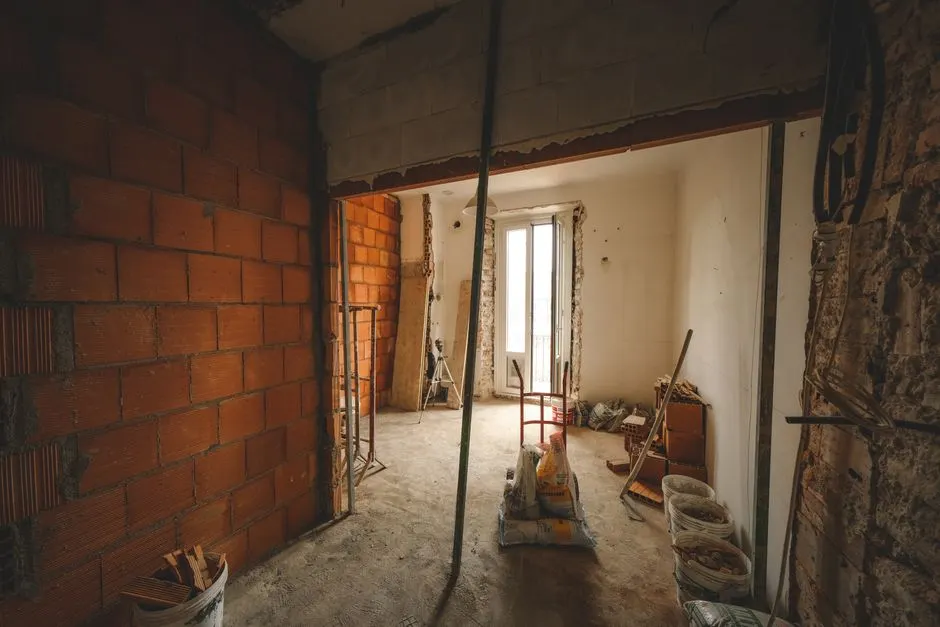
Removing spray foam from a cavity wall in Twerton means cutting the foam out of the cavity with a specialist drill-and-extraction rig, not pulling it out through the inner leaf. The job needs a two-man team, a borescope, and a vacuum system rated for cured polyurethane - it is not a DIY task. Most Twerton cavity walls are cleared in one day, and the cavity is then left ready for a mineral wool or bead re-fill.
We are Platinum Shield Spray Foam, and we have been pulling failed cavity foam out of Bath stone and brick houses for years. Below we walk through what the removal actually looks like, what it costs in 2026, and how to tell whether your Twerton property needs it done at all.
What cavity wall spray foam removal in Twerton actually involves
Cavity wall spray foam removal in Twerton is the process of extracting cured polyurethane foam from the gap between your inner and outer brick or stone leaves, then restoring the wall so it can be insulated properly again. It is needed when the original foam has failed, blocked ventilation, or triggered a mortgage lender's refusal to lend.
Twerton is dominated by Victorian and inter-war terraces, plus the big post-war estate stock around Twerton High Street and Shophouse Road. Almost all of that housing has a 50mm to 75mm cavity - narrower than the 100mm you would find in a 1990s build. That matters, because narrow cavities are exactly where spray foam causes the most trouble.
When we open up a wall in Twerton, we usually find one of three things:
- Urea-formaldehyde foam from the 1970s and 80s, which has crumbled to powder and is holding moisture against the inner leaf.
- Early polyurethane foam that has shrunk away from the brickwork, leaving cold bridges and condensation paths.
- Later closed-cell foam that is still intact but has been flagged by a surveyor because it seals the cavity and stops the wall breathing.
If you are not sure which type you have, our insulation assessment in Bath, Somerset uses a borescope through a single 10mm hole to identify the foam and measure how far it has degraded.
Why spray foam in a Twerton cavity wall becomes a problem
Spray foam in a Twerton cavity wall becomes a problem because it traps water against the inner leaf and stops the wall from drying outward. Bath's climate does the rest - we get around 800mm of rain a year, and prevailing south-westerly winds drive it straight into west-facing elevations.
In a normal cavity, any water that gets past the outer leaf runs down the cavity and out through weep holes at the base. Foam fills that gap. Water has nowhere to go, so it wicks sideways into the inner leaf, and you start seeing damp patches on the plaster inside.
The other issue is mortgage lending. Since the 2022 guidance tightened, most high-street lenders now want evidence that spray-foamed cavity walls have been assessed or removed before they will release funds. We handle a steady stream of these jobs for sellers in Twerton, Whiteway, and Southdown who need the work done before exchange.
Typical warning signs on a Twerton property:
- Damp or tide-mark staining on internal walls, usually below first-floor window level.
- Cold spots you can feel by hand on the inner leaf, even with the heating on.
- A musty smell in a downstairs room that gets worse after wet weather.
- Blown or bubbling plaster around skirting boards.
- A surveyor's report that specifically mentions 'foam-filled cavity'.
How do you remove spray foam from a cavity wall in Twerton?
You remove spray foam from a cavity wall in Twerton by drilling a grid of 25mm access holes across the elevation, breaking the foam up with a rotary cutter, and vacuuming the debris out through a sealed extraction hose. The wall is then inspected with a borescope and the holes are made good.
Here is the sequence we follow on a typical Twerton terrace:
1. Survey and access plan
We start with a borescope survey to map where the foam sits and how dense it is. On a standard Twerton two-up two-down, that is usually the front elevation, the rear elevation, and both gable ends if they are exposed. We agree the hole pattern with you before any drilling starts.
2. Drilling the access grid
Holes go in on a 500mm grid, at mortar joints wherever possible. On Bath stone elevations we use a smaller bit and a slower drill to avoid spalling the face. Expect 40 to 60 holes on a typical Twerton terrace.
3. Foam extraction
We feed a rotary cutter head into the cavity and break the foam into chunks, then pull it out with a high-volume vacuum. Open-cell foam comes out fast - roughly 20 to 30 square metres an hour. Closed-cell foam is slower, around 10 to 15 square metres an hour, because it is denser and sticks harder to the brickwork.
4. Cavity clean and inspection
Once the bulk is out, we run a compressed-air lance through the cavity to clear dust and small fragments, then re-scope every section to confirm the cavity is clear. Weep holes are checked and cleared at this stage.
5. Making good and re-insulation
Holes are filled with matching mortar or stone dust, and the wall is left ready for a breathable re-fill. For most Twerton properties we recommend mineral wool or polystyrene bead, both of which are lender-friendly and allow the wall to drain.
If the foam is bonded hard to the inner leaf and we want to avoid aggressive cutting, we sometimes switch to dry ice blasting spray foam removal in Bath, Somerset, which freezes the foam so it fractures cleanly off the substrate.
How much does cavity wall spray foam removal cost in Twerton, Bath?
Cavity wall spray foam removal in Twerton costs between £2,400 and £5,800 for a typical terraced house in 2026, depending on the foam type, the wall area, and whether the property is mid-terrace or end-of-terrace.
Here is how the numbers break down for a standard Twerton two-up two-down:
- Mid-terrace, open-cell foam, two elevations: £2,400 - £3,200.
- Mid-terrace, closed-cell foam, two elevations: £3,400 - £4,600.
- End-terrace or semi, three elevations: £4,200 - £5,800.
- Re-insulation after removal (mineral wool or bead): £700 - £1,400 extra.
- Making good and redecoration: £300 - £900, depending on how much plaster needs patching.
Two things push the price up on Twerton jobs. First, Bath stone elevations take longer to drill cleanly than standard brick. Second, if the foam has been in place for 20-plus years and has bonded to the inner leaf, extraction slows down and the labour hours climb.
We give a fixed price after the survey, not a day rate. If you want a ballpark before we visit, send us photos of the external walls and the internal damp patches and we can usually give you a range within a few hours.
Can cavity wall spray foam be removed without damage in Twerton?
Yes - cavity wall spray foam can be removed without structural damage in Twerton, provided the access holes are drilled at mortar joints and the extraction is done at controlled speed. The brickwork itself is rarely damaged. What does get disturbed is the internal plaster, and that is normal.
On a typical Twerton job, expect the following:
- External brickwork: intact. Holes are filled and colour-matched. On Bath stone we use a stone dust mix that weathers in within a season.
- Internal plaster: some patching needed around skirting level where damp has already blown the finish. Usually 2 to 5 square metres per room.
- Cavity ties: inspected during the survey. If any are corroded, we flag them for replacement before re-insulation.
- Weep holes: cleared and left open. This is essential - a re-filled cavity with blocked weep holes will damp again within two winters.
The one scenario where damage is unavoidable is when the foam has been injected into a wall that already had failed ties or spalling brickwork. In that case the removal exposes a pre-existing problem rather than causing it. We tell you that upfront at survey stage, not halfway through the job.
Common mistakes we see on Twerton cavity wall jobs
The biggest mistake we see on Twerton cavity wall jobs is homeowners trying to remove the foam from inside the house. You cannot reach the cavity that way without removing plaster and often the inner leaf itself - it turns a one-day job into a two-week rebuild.
Other things that go wrong:
- Drilling through the outer leaf into the cavity with an oversized bit. This cracks the brick face and leaves visible holes that never quite disappear.
- Using a domestic wet-and-dry vacuum. Cured polyurethane dust clogs the filter in minutes and the motor overheats. You need a proper extraction unit with a cyclone pre-separator.
- Skipping the borescope survey. Without it, you cannot tell open-cell from closed-cell foam, and the two behave very differently during extraction.
- Re-insulating with the wrong product. Putting bead or wool back into a cavity that still has foam residue causes the same damp problem within a year.
- Not telling the mortgage lender. If you are selling, the lender wants documentation. A removal with no paperwork is worth very little at exchange.
If you are buying a property in Twerton and the survey has flagged foam, get a proper mortgage lender spray foam removal in Bath, Somerset quote before you exchange. It is much easier to negotiate the price down than to argue about it afterwards.
When to call a professional for cavity wall spray foam removal
Call a professional for cavity wall spray foam removal when you can see damp patches on the inner leaf, when a surveyor has flagged the foam, or when you are planning to sell within the next 12 months. Those three situations cover the vast majority of Twerton jobs we take on.
You should also call us if:
- The foam was installed more than 15 years ago and has never been inspected.
- You have cold spots on internal walls that do not improve when the heating is on.
- Your energy bills have crept up year on year despite no change in usage.
- You are remortgaging and the lender's valuer has raised a query.
We cover the whole of Bath, including Twerton, Whiteway, Southdown, and the city centre. Our team carries the extraction rig, the borescope, and the making-good kit on every van, so most jobs are surveyed and quoted in one visit and completed in one day.
If you are in the Twerton area and want a second opinion on a surveyor's report, we are happy to look at it. We do that for free - it takes us ten minutes and it saves you a lot of guesswork.
Frequently Asked Questions
How do you remove spray foam from a cavity wall in Twerton?
We drill a 500mm grid of 25mm holes across the elevation, break the foam up with a rotary cutter, and vacuum it out through a sealed extraction hose. The cavity is then scoped, cleaned, and the holes are made good. A typical Twerton terrace takes one working day.
How much does cavity wall spray foam removal cost in Twerton, Bath?
Expect £2,400 to £5,800 in 2026 for a typical Twerton terraced house. Mid-terrace open-cell foam sits at the lower end; end-terrace closed-cell foam with three elevations sits at the top. Re-insulation adds £700 to £1,400.
Can cavity wall spray foam be removed without damage in Twerton?
Yes. Drilling at mortar joints and extracting at controlled speed leaves the brickwork intact. Internal plaster usually needs 2 to 5 square metres of patching per affected room, which is normal for any cavity foam removal job.
Who does cavity wall spray foam removal near me in Twerton?
We do. Platinum Shield Spray Foam covers Twerton and the rest of Bath, including Whiteway, Southdown, and the city centre. We survey, quote, and complete most jobs within a week of the first call.
How long does the removal take?
A standard Twerton two-up two-down takes one day on site. Larger semis or properties with three exposed elevations take two days. Making good and re-insulation are usually scheduled for a separate visit a few days later.
Get help with spray foam removal in Bath
If your Twerton cavity wall has foam in it and you are seeing damp, cold spots, or a lender's query, we can survey it and give you a fixed price. We work across Bath seven days a week and most jobs are booked within a few days.
Call Platinum Shield Spray Foam on 0122 528 5137 and we will get you booked in.