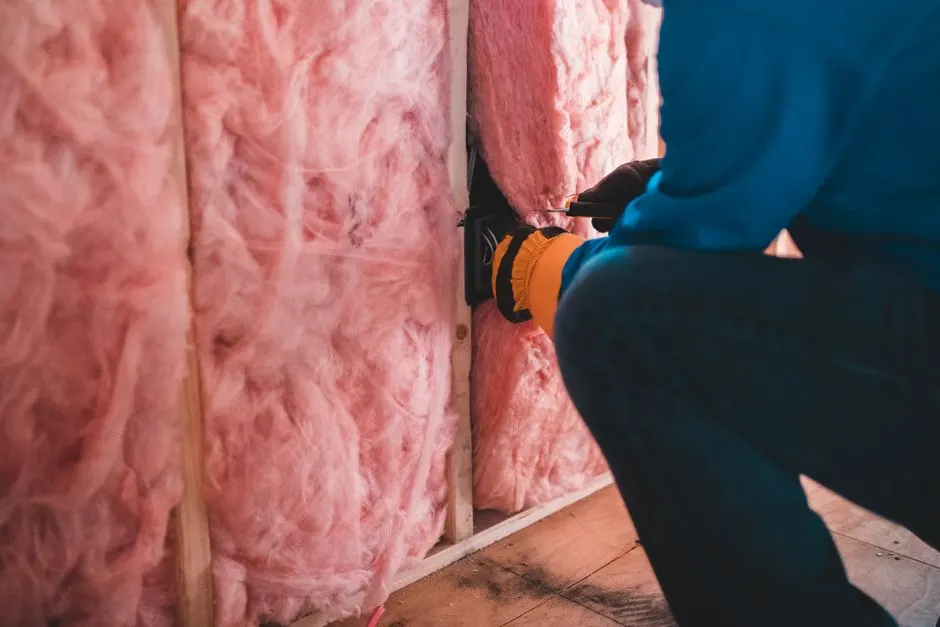
The smell you are noticing after attic spray foam removal in Kingsmead is almost always residual off-gassing from foam fragments and dust left behind, combined with disturbed loft air that has been trapped under the foam for years. It is not a sign that the removal failed - but it does mean the job was not finished cleanly. The rest of this guide explains exactly what that odour is, how long it lasts, when it becomes a genuine health concern, and how we clear it for homeowners across Kingsmead and the wider Bath area.
Attic spray foam removal smell in Kingsmead is a ventilation and residue problem that appears when foam is cut, scraped or blasted out of a loft and fine particles plus trapped volatile compounds are released into the roof space. If you have just had spray foam pulled from a Kingsmead terrace or a converted loft near the river, you are in the right place.
What the smell actually is
The smell is a mixture of three things: uncured foam residue, dust from the cut foam cells, and the stale air that was sealed into your loft when the foam was first installed. Spray foam is a two-part polyurethane. When it is applied correctly it cures fully within 24 to 72 hours and becomes largely inert. When it is cut out years later, the mechanical action of removal exposes fresh surfaces inside the foam cells, and those surfaces release small amounts of the same compounds that were present during the original install.
In Kingsmead specifically we see a lot of foam that was installed between roughly 2010 and 2018 under older grant schemes. Much of it was applied too thickly, in the wrong conditions, or directly onto roof felt with no ventilation gap. That foam never fully cured in the way the manufacturer intended. When we cut it out, the smell is stronger than it would be from a well-applied product.
The three odour sources break down like this:
- Chemical or solvent-like smell - residual isocyanates and polyol compounds releasing from freshly cut foam edges. Sharp, plasticky, sometimes described as nail-varnish or new-car smell.
- Musty or damp smell - condensation that built up behind the foam over the years, now exposed. Very common in Kingsmead because of the river proximity and the number of older stone-built terraces.
- Dusty, chalky smell - fine foam particles and old insulation fibres still suspended in the loft air. This one clears fastest with proper extraction and ventilation.
If you can tell which of those three you are smelling, you already know roughly what needs doing. A sharp chemical smell means residue removal. A musty smell means the roof space needs to dry and be assessed for timber damage. A dusty smell means the clean-up was incomplete.
Why does spray foam removal smell in Kingsmead, Bath?
Spray foam removal smells in Kingsmead, Bath because the removal process physically breaks open millions of closed foam cells, releasing trapped gases and creating fine airborne particles that then sit in a loft with very little natural airflow. The geography and housing stock here make it worse than in many other parts of the country.
Kingsmead sits low, close to the River Avon, and a large share of the housing is Victorian and Edwardian terraced property with slate roofs and minimal eaves ventilation. Those lofts were never designed for the airtight seal that spray foam creates. When the foam goes in, the loft stops breathing. When the foam comes out, all the moisture and stale air that accumulated over a decade or more is suddenly free to move around - and you smell it inside the house.
There are four practical reasons the odour is worse in this area:
- Poor existing ventilation. Many Kingsmead lofts have no ridge vents, no tile vents and blocked soffit gaps. There is nowhere for the smell to go except down into the bedrooms.
- Foam applied directly to the roof felt. This traps condensation against the timber. When removed, that damp timber releases a musty smell for weeks.
- Incomplete extraction. Foam dust is fine - around 0.1 to 0.5 mm in many cases - and a standard vacuum with a domestic filter will blow it straight back into the air.
- Warm lofts in autumn. As we head into October and the heating comes on, the loft warms up, and warm air holds and circulates odours far more effectively than cold air.
We see this pattern constantly across spray foam removal in Kingsmead, and it is almost never the foam itself still curing. It is the loft environment doing what physics says it will do.
How long the smell lasts after spray foam removal in Kingsmead
With a proper removal and clean, the chemical smell should fade within 3 to 7 days and be fully gone within 2 to 4 weeks. A musty or damp smell can linger for 6 to 12 weeks if the roof timbers were wet behind the foam and need to dry out naturally.
Those numbers assume the job was done with HEPA extraction, the loft was ventilated, and any damp timber was identified and treated. If the foam was simply ripped out and bagged with no dust control, expect the smell to hang around far longer - we have been called to Kingsmead properties where the odour was still noticeable four months after a cheap removal job.
Rough timeline we work to:
- Days 1-3: strongest chemical smell. Windows open, loft hatch open, extraction running.
- Days 4-14: smell drops sharply. Any remaining odour is usually dust-related.
- Weeks 3-4: chemical smell should be gone. If it is not, residue was left behind.
- Weeks 4-12: musty smell may persist while timber dries. This is normal and not dangerous.
Temperature matters. A loft at 25°C will off-gas faster than one at 10°C, so a removal done in late autumn in Bath will clear more slowly than the same job in July. If you are reading this in October 2026 and the smell is still there after three weeks, that is worth a phone call rather than more waiting.
Is the smell from attic spray foam removal dangerous in Kingsmead?
For most people the smell is unpleasant but not dangerous - the concentrations released during removal are far below occupational exposure limits. It becomes a real concern if you have asthma, young children in the house, or the smell is accompanied by headaches, sore eyes or breathing difficulty.
The compounds you are smelling are mostly residual isocyanates and trace amines. In an open, well-ventilated loft the concentration drops quickly. The problem in Kingsmead is that lofts are often sealed from the rest of the house by a single hatch, and if that hatch is not sealed during removal, dust and vapour migrate straight into the landing and bedrooms.
Signs you should treat it as more than an annoyance:
- Headaches or dizziness that appear only when you are upstairs.
- Persistent coughing, wheezing or a tight chest in the evenings.
- Eye or throat irritation that clears when you leave the house.
- Any reaction in a child, an elderly resident, or anyone with a diagnosed respiratory condition.
If any of those apply, get the loft properly ventilated and get a professional assessment before you spend another night in the room below. We would rather you called us out for nothing than ignored a genuine issue. The same applies to anyone who has had spray foam insulation removal in Bath done cheaply and is now living with the consequences.
How to get rid of spray foam removal smell in Kingsmead
You get rid of spray foam removal smell in Kingsmead by removing the residue that is causing it, then ventilating the loft hard for at least two weeks. Air fresheners and odour bombs do nothing except mask a problem that is still sitting in the dust.
The order matters. Most people try to ventilate first and clean second, which just spreads the dust around. Do it the other way round.
- Seal the loft hatch with tape and a draught excluder so dust cannot migrate into the house while you work.
- Remove all remaining foam fragments and dust. This means HEPA vacuuming every rafter, every joist and every square metre of the loft floor - not a quick sweep.
- Treat any damp or stained timber. If the rafters are discoloured or feel cold and damp, they need drying and a fungicidal treatment before anything else goes back in.
- Ventilate continuously. Loft hatch open during the day, windows on the landing open, and if there is no eaves ventilation, consider having tile vents or a ridge vent fitted.
- Run an air purifier with a carbon filter on the landing for the first fortnight. It will not fix the source, but it keeps the house liveable while the loft clears.
- Do not re-insulate too soon. Leave the loft open and breathing for at least a month before any new insulation goes down.
If you want the job done once, properly, our team handles attic spray foam removal in Bath, Somerset with HEPA extraction and full post-removal cleaning as standard. It is the difference between a smell that clears in a week and one that is still there at Christmas.
Common mistakes we see after attic foam removal
The mistakes that cause lingering smells in Kingsmead are almost always about dust control and ventilation, not about the removal itself. Here is what we find when we are called back to properties where someone else did the work.
- Using a domestic vacuum. A standard Henry or shop vac without a HEPA filter blows fine foam dust straight back into the loft air. It looks clean and smells worse.
- Bagging foam in the loft. Sealed bags of foam fragments sit there off-gassing for weeks. They need to come out of the building the same day.
- Leaving the loft hatch open during removal. This is the single biggest cause of smell in the bedrooms below. Seal it, work, then ventilate.
- Skipping the timber check. Foam hides rot. If the rafters were damp behind the foam, that must be dealt with or the musty smell never leaves.
- Re-insulating immediately. Putting new insulation down within days traps the residual smell in the loft for months.
- Assuming the smell means the foam is still there. Nine times out of ten it is residue, not missed foam - but that tenth time it is missed foam, and only an inspection will tell you which.
If you are unsure which of these applies to your property, an insulation assessment in Bath will tell you in under an hour what is actually causing the odour and what needs to be done about it.
When to call a professional
Call a professional if the smell is still noticeable three weeks after removal, if anyone in the house is reacting to it, or if you can see foam residue still stuck to the rafters. Those three situations cover the vast majority of cases we deal with in Kingsmead.
We are Platinum Shield Spray Foam, and we work across Bath and the surrounding Somerset area removing spray foam from lofts, roofs, cavity walls and commercial buildings. We handle the whole job - extraction, HEPA clean-down, timber inspection and ventilation advice - so you are not left chasing three different trades.
We also work regularly in the neighbouring areas, including spray foam removal in Bath City Centre, where the same combination of old stone buildings and sealed lofts causes identical problems. If you are nearby and not sure whether you are in our patch, just ask.
Frequently Asked Questions
Why does my attic spray foam removal smell in Kingsmead?
Because removal breaks open foam cells and releases trapped compounds plus fine dust into a loft with very little airflow. In Kingsmead's older terraces, poor eaves ventilation means that smell has nowhere to go except down into the house.
How long does the smell last after spray foam removal in Kingsmead?
Chemical odour usually fades in 3 to 7 days and is gone within 2 to 4 weeks. A musty smell from damp timber can last 6 to 12 weeks while the roof space dries out naturally.
Is the smell from attic spray foam removal dangerous in Kingsmead?
For most healthy adults, no - concentrations are well below occupational limits. It is a genuine concern if you have asthma, young children, or symptoms like headaches, sore eyes or wheezing that appear only when you are upstairs.
How do I stop spray foam removal smell in Kingsmead, Bath?
Remove all residual foam dust with HEPA extraction, seal the loft hatch during the work, then ventilate the loft hard for at least two weeks. Do not re-insulate until the smell has fully cleared.
Can I just wait for the smell to go away on its own?
Sometimes, if the removal was clean and the loft ventilates well. If it is still noticeable after three weeks, or if it is a musty rather than chemical smell, waiting will not fix it - the source is still there.
Get help with spray foam removal in Bath
If the smell in your Kingsmead loft is not clearing, we can inspect it, find the source and remove whatever is causing it - usually within a single visit. Call Platinum Shield Spray Foam on 0122 528 5137 and we will tell you straight away whether it is a residue problem, a damp problem, or foam that was missed.